A title sequence has to include the following; the title of the film, fade in/out, stars, music, director, screenplay, producer, production company (logo), production company music.
The opening title sequences we had to look at were from the film Se7en and Godzilla.
Se7en
The opening sequence to the film se7ev is actually quite ghastly, however I think that this is good as it sets the whole theme for the rest of the film. You can tell from this opening sequence that the film's genre is going to be a thriller and the film is going to be full of action, from just watching this title sequence it makes the audience want to watch on.
This title sequences includes; "New Line cinema presents", "An Arnold Kopelson Production", "A film by David Fincher", "Brad Pitt", "Morgan Freeman", "Se7en Title", "Gwyneth Paltrow", "Richard Roundtree", "John Cassini", "Reginald E.Cathey", "Peter Crombie". I can tell by this title sequence that the film se7en was produced by Arnold Kopelson and directed by David Fincher.
Unlike all the normal title opening sequences this one doesn't have a studio ident.
Panic Room
The opening sequence for this thriller shows us different views of all the buildings around New York city. The audience can see that it is in New York because you can clearly see times square and the Empire State building, this tells the audience that the film is going to be set in New York city.
This title sequence includes; the Columbia studios ident, "Columbia Pictures presents", "A Hofflund/Polone production", "A Indelible picture", "Jodie Foster", "Forest Whitaker", Dwight Yoakam", Jared Leto", "Panic Room", "Kristen Stewart", "Ann Magnuson, Ian Buchanni", Patrick Bauchau, Paul Schulze", "Casting by Laray Mayfield", "Costume Designer Michael Kaplan", Music by Howard Shore", "Film Editors James Haygood, Angus Wall", "Production Designer Arthur Max", "Director of Photography Conrad W. Hall, Darius Khondji", Produced by Gavin Polone, Judy Hofflund, David Koepp, Cean Chaffin", "Written by David Koepp", "Directed by David Fincher."
1. Hidden I thought that Hidden was the worst of the five thrillers I saw. Because it was filmed at night the students only relied on the street lamps for the lighting which did not allow us to see the actors very well at all. For the students to correct this major problem they should trying filming in the daytime as the lighting will be much better and the audience will get a clear sense of whats going on as they wasn't before because they couldn't really see what was happening. Another things that was bad about this thriller is that all the shots were more or less the same, this made the thriller boring for the audience as it all looked the same.
2. Power Cut
I thought that Power cut was the second worst thriller that I saw. I think this because of the location it was filmed in. This however could have easily been improved before the group even begun filming, if they wanted the thriller to be about an attack in an office then they shouldn't have filmed in a classroom because it is very clear to the audience that it is not an office. Furthermore most films or scenes that are filmed in black and white are filmed that way to suggest that it was in the past or a long time ago for example before films had colour. This colour effect does not tie in well with what the film is about and gives us no reason for why it is filmed with this effect.
3. After Eight I thought that this thriller was much better than the previous two. This is because of the good mise-en-scene, it is clear to the audience that the couple in the film live in the house they that are being filmed in. The couple are dressed normally and it is set in a normal setting showing that the film is more realistic and believable than the other two thriller. However I do believe that there is some flaws in whether this film was filmed for the right genre because as the film progresses the audience get the idea of this film being more of a horror rather than a thriller.
4. Hunter I believe that this short clip of a thriller was filmed and constructed really well. The plot and characters were chosen well, matching the actors age with the age of the characters, all in all giving the thriller a sense of realism. In some thrillers it is hard to do this however when making this thriller the group went the extra mile making sure that it was filmed perfectly with a variety of camera angles and casted well with the characters being of different ages. In my opinion this was my favorite thriller opening.
'Unknown' -2011 Thriller- 113 Minutes.
Directed by Jaume Collet-Serra
Written by Oliver Butcher (screenplay), Stephen Cornwell (screenplay).
Stars Liam Neeson, Diane Kruger, January Jones.
Unknown Summary
A scientist and his wife travel to Berlin for a conference which he will learn that a top scientist and his Arab funder announce the breakthrough of a new way to save the world from poverty and famine. In a turn of events he ends up in a car crash which puts him in a coma where he awakes from four days later to find he is without any identification and a bad memory. He then remembers back to where he was at the hotel with his wife and finds her refusing to recognise him as she is with another man who she says is her husband. The film then begins to show how this man goes about trying to find out his real identity and tries to get back on track with his normal life.
You can tell by how this film is made that it is clearly a thriller, this is because of the fast paced with loads of suspense and packed with doubt of the audience wanting to know who the villain is and what is going to happen next.
One of the scenes in this Thriller that really creates a lot of suspense and worry is the car chase scene. The scene has a lot of cuts and different camera angels, the director has made sure that there are a lot of cuts in this scene in order to create suspense and to show the amount of action going on in this scene. The lighting in this scene is really dark blue colours this is to give the audience a feeling that something bad is about to happen.
'Rope' -1984 Drama 80 minutes.
Directed by- Alfred Hitchcock
Written by- Hume Cronyn (story), Arthur Laurents (screenplay)
Stars- James Stewart, John Dall, Farley Granger
This film was based on the real murder case of Leopold and Leob in 1924. Leopold and Loeb were upperclass Chicago students who murdered a teenage boy. In this film there is a dramatic irony as the audience know throughout the film that David has been killed and is hidden in the coffin. So every time someone goes anywhere the coffin the audience become tense and lean forward on the edge of their seat waiting for the moment someone finds out that david is dead hidden inside the coffin.
The film 'rope' is completely filled with suspense right from the opening scene. Brandon and Philip believe that they are intellectually superior to their fellow student David Kentley. Due to their jealously of him they decided to murder him. From when they plan to do this they all the conventions that make a thriller come into place.
The role of Brandon is played by John Dall who portrays the role very well. The audience see Brandon as a cruel malicious man who is addicted to wickedness and crime. Brandon and Philip end up deciding to hide davids body in a trunk in the living room where they hold a dinner party that same evening.
-By watching this short thriller called 'At the fort' I can now understand and annotate the thriller showing the different techniques that are used, why they are used and what effect they give off.
Long Shot-
The first technique that is used in this thriller is a a very long shot which just shows the actor 'Matt' walking on a path not being troubled or followed by anyone. This shots makes the audience feel as though 'Matt' has nothing to worry about as he is walking by himself with clear daylight. It also makes the audience feel as though he is going to be fine and nothing is going to harm him as he will just carry on his walk on the path. Diegetic Sound-
The diegetic sound that is a birdsong, this is used to show the audience that it is a peaceful day and no harm is going to come to 'Matt'. It makes them feel as though everything is normal and nothing bad or strange is going to happen to 'Matt' later in this thriller. Hand Held Camera Shot-
The next technique used is a handheld point of view shot, this shot is there is shows what 'Matt' sees. This shot is used to give the audience a glimpse of what 'Matt' sees and how he feels. It builds the audience tension and excitement for whats going to happen next. Reverse Shots-
In this shot it shows the main character 'Matt' and then what he sees. This shot is extremely helpful to the audience as they can now understand whats happening in this thriller. The shot allows the audience to feel scared or be on the edge of their seat waiting to see what is going to happen next. High Angle Shot-
This shot is very effective in thrillers as it is used to show how lonely and confined the character is. The high angle shots immediately shows how the Character has been made out to be small and vulnerable, it makes the audience feel like the character is soon going to suffer an attack from a bigger and greater evil. Dark Lighting-
In this short thriller there is a tracking shot whilst the main character 'Matt' is walking in dark lighting. I believe that this is very effective as it makes the audience worry is there is anything out there in the dark and whether something may be lurking and hiding ready to pounce out on 'Matt'. Fast Pace Shots-
These shots are put in thrillers to build by suspense and a bit of tension or insecurity. It makes the audience feel as though something bad is going to happen and will have you gripping onto your seat with the question of wherever the character will be OK or not.
Studio Idnets have a purpose of trying to represent the company by giving them their own identity. i will be looking at the following companies idents and how they have changed over the years.
Universal The first universal ident was created in 1914 two years after the company was founded. This ident showed the company name along with the words "The Trans-Atlantic film Co. LTD" This is shown in the Gif to the right. As the company progressed the ident changed from having a plane flying across the earth showing the companies name, to the earth spinning around with the logo across it. The company have also developed the ident to show that it was their 100th year anniversary.
I believe that this ident and the name of the company represents how the company is powerful and well known. This is shown by
the name of the company circulating the world and ending up infront of the world showing that they are dominant.
Dreamworks Dreamworks company was founded in 1994. The owners wanted to create a new kind of hollywood studios, they have also worked very hard to have one of the biggest and best animation divisions in the world.
One of the three founders, Steven Spielburg, wanted the ident of Dreamworks to be a reminiscent of
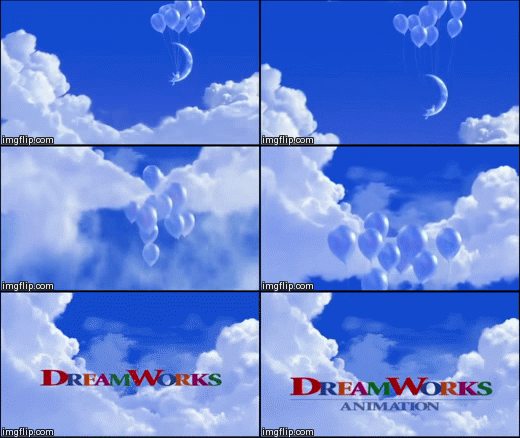
Hollywood's golden age. The ident was going to be computer generated at first but Spielburg's friends suggested that it may look better if it was painted. The ident starts with the young boy floating up to the moon with some balloons. As you can see in the Gif to the left. The gif to the right shows how after the boy reaches the moon he lets go of the balloons, they carry on floating up in the sky, then suddenly burst revealing the Dreamworks name.
Paramount Pictures
This film production company was formed in 1912. Their ident has relatively stayed the same over the years. The ident shows a tall mountain with the 'Paramount' name above the mountain where the tip is. The is purposely placed there to show that the company are the top film production company there is and want to be respected by all as they believe they are at the top.
Vertigo Films Vertigo Films is an independent UK film company founded in 2002. The ident shows the name of the company in a bright red and in Capital. I think that this suggests to people that the film company want to make sure that they are known in the film production world.
'Brick'
The opening of the film brick is dominated by the colour blue. For example you can see in the clip below how the colour blue is used in this first scene to make the audience feel sad. The opening also involves a lot of dark black images which gives the sequence a dull colour and dull feeling.
'Zodiac' This Thriller which is based on real cases opens with a wide shot that goes on for quite some time of the night skyline and then a neighbourhood with many houses setting off all kinds of fireworks. It is set on the 4th of july which explains why all the fireworks are going off, its dark out with grey undertones which are there to match the nights sky. The noise of the fireworks going off foreshadows what the two teens are going to experience later in this sequence.
Also when the teens reach the car park area, some other people in two cars start firing fireworks at them, which foreshadows the two teens getting shot. The sequence makes us believe that these two teens are just hanging out like normally would and nothing bad is about to happen. The mysterious cars that creeps the boy and girl out leaves the car parking forcing them to relax and the audience to think that nothing bad is going to happen. This is why when the car suddenly races back to the car park the audience feel the same anxiety as the two teens are feeling, and we automatically get the sense that something bad is going to happen. we then can see from an over the shoulder shot from the boys and girls shoulder a figure walking towards the car. The next shot we see is a close up of the boy saying 'man you really creeped us out', which is then followed by close up of the gun firing recklessly at the two kids in the car.
'No country for Old Men'
The opening of this thriller has a lot of dialogue as it starts of with a voiceover of a man. The man is speaking in a monotone and doesn't sound very happy. The voiceover straight away gives the audience a sense of how something bad has happened or is about to, it also allows us to understand the setting of the film because of the accent of the voiceover. After the audience start to get that the mise-en-scene setting is in a western part of America there is then
a scene showing with barren dry deserts that are deserted.
The next scene is of a policeman arrested a man. This make the audience think that authority figure in this opening does have power over the criminal he has just arrested. However the following scene shows us the criminal killing the policeman with total ease, and as if he knows exactly what to do.
'A History of Violence'
In the opening of this thriller, you see a little house with two men walking out from it. One of the men is dressed in a black suit to symbolize the dark and nasty things, the audience now begin to think that he is the villain or bad guy in this film. The other man is dressed very casual in jeans and a t-shirt. The slow pace opening of this film shows makes the audience feel as though there is something coming or something is going to happen. At the start of the film nothing really happens so we do not quite get the context of what os happening.
'The Birds' -1963 Thriller/Horror- 119 Minutes Directed by Alfred Hitchcock
Written by Daphne Du Maurier(Story) and Evan Hunter (Screenplay)
Stars Tippi Hedren, Rod Taylor, Jessica Tandy, Suzanne Pleshette and Veronica Cartwright.
The Birds
The film is based in a small fishing town in California called Bodega Bay, the quiet town then suddenly turns into the subject of violent attacks by birds. Hitchcock often likes to scare the audience by making them think that the people in Bodega Bay have no where to hide! The external threat in this film is from nature unlike the rest of Hitchcock's films where the threat is normally a villain trying to take over the world like in the film 'North by Nortwest' or a mad mad on a vicious killing spree.
As thrillers are known to be fast paced films, Hitchcock tries to show this by the amount of suspense there is in the film.
A way Hitchcock does this is by using sound effectively, in either a diegetic or non-diegetic way. In the schoolyard scene where the actress Tippi Hendren's character is sitting on a bench, the schoolchildren are innocently singing a song which contrasts to the evil attack by nature. Another way Alfred Hitchcock trys to extensively use suspense in this movie is by using a technique called dramatic irony. Dramatic irony is when the audience know something is going to happen but the actors don't. This Technique is used in the scene where the actress 'Tippi Hendrens' character is waiting in the school yard and has her back to the children's climbing where all the crows are gathering. This technique gives off the effect of suspense, The audience would now at this point be sitting on the edge of their sit waiting to see what will happen next asking themselves, 'Will the birds attack?' 'Will she survive?'!!
This short clip below was made by Hitchcock starring himself talking about 'the birds and their age long relationship with man.'
Mise-en-scene is a french phrase that translates to "In the scene". There are five elements of Mise-en-scene and they are the following;
1. Costume, Hair and Make-up.
2. Setting and Props.
3. Facial Expressions and Body Language
4. Positioning of characters and objects in the form.
5. Lighting and Colour.
George Melies born in 1861 Paris, in responsible for making over 500 films in his time and creating so many different filming techniques. Back when George Melies was creating his films in the late 1800's there was no such thing as a film with color, however George found a way to overcome this, Melies hand painted each scene he filmed.
The wizard of oz was one of Technicolor's first major success's.
It was filmed in technicolor 3 Strip film that is for red, green and blue. It works by having these three different films running through the camera at the same time.
Denotation- This is the literal description of an idea concept of an object.
Connotation- This is what we associate with a particular idea concept or object.
For example the denotation of the colour red is that it is a just a particular wave length on the colour spectrum. However the connotations of the colour red are things that represent emotions like love, danger, etc.
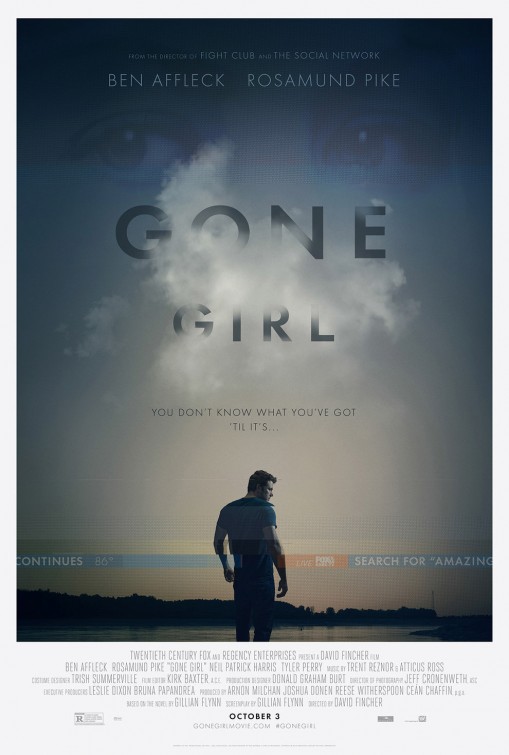
Thriller Conventions- A Thriller is a fast paced film that is frequently filled with action and excitement to keep the audience on the edge of their seat. A thriller is normally consists of a hero and and a more powerful villain that he or she has to destroy and overcome. The normal plot of a thriller is that the villain presents obstacles for the hero to overcome. Some examples of deceives that are used in thrillers are as follows; Suspense, Red herrings and Cliff hangers. An example of a thriller that uses all of these conventions is Gone Girl. The film Gone Girl is a thriller about how a mans wife disappears and before he even becomes to come to grips with her strange disappearance he becomes the main suspect in this mystery. Thrillers can often overlap with mystery stories however they re clearly distinguished by the structure of their plots. This Gone Girl thriller was unlike no other as there was no murder to be solved and no obvious evil/villain. However this thriller used many of the same thriller conventions that are used in all thriller. The suspense in Gone Girl was created by the fact the mans wife had disappeared and had what he was now figuring out another alternative life without him. This created suspense as it made the audience unaware of what was going to happen next in the movie, which is exactly what happens in most thrillers. Thrillers are said to create a fearful excitement and you can definitely tell that from this movie the director has created this.
A cliff hanger is a plot device mostly used in a fiction story line that involves the main character being put in a difficult dilemma, and even in some case a situation of confrontation with another character. This device is used to make the audience want to watch on to see if this dilemma or problem ever gets solved.
A red herring refers to something that misleads or distracts the attention from the relevant issues. This device brings the characters to a false conclusion misleading them from the truth.
Cliff hangers and Red herrings are there to create suspense and engage the audience by doing this. A good examples of how a thriller does this is in jaws.
Hitchcock once said that thriller's allow the audience 'to put their toe in the cold water of fear to see what it's like.'
Some of the key features in a thriller are the; low key lighting, quick cuts, shadows, changes in angle shots, diegetic sound of heavy breathing, dramatic music.
The Semantic Code/ Symbolic Code.
This codes uses connotations to keep the reader guessing if there are other meanings to the whats going on in the thriller. For example in the film 'The Da Vinci Code' there is a series of hints and clues that are there to help the main characters solve the mystery of the Holy Grail.
The Enigma Code
This is the is the idea that the text is read and understood in different ways. For example if a thriller starts with a dead body, then the audience immediately question who the killer is and they will keep watching to find out who the killer is. The enigma code is there to also make the audience ask questions like who is this character and where are they going.
'Psycho' - 1960 Thriller/Horror- 109 Mins
Directed By Alfred Hitchcock
Written by Robert Bloch(Story) and Joseph Stefano(Screenplay)
Stars Anthony Perkins, Janet Leigh and Vera Miles.
The director Alfred Hitchcock wanted the audience to believe that the film was just going to be about the missing £40,000 and then the murder becomes a shock. He believed that the shock would make the audience so apprehensive that for the rest of the film, they would think that anything would be possible and anyone could be killed. Hitchcock also wanted wanted the audience to know that in this thriller there is going to be a murderer in the house. However he wanted to leave the suspense there by making sure her audience didn't know whether and when the killer would strike again. For this thriller to have lots of suspense Hitchcock made sure the audience did know that the killer could murder someone at any minute.
The external threat in this movie is from a mad man, a man whose mind is deranged he is the murderer in this Hitchcock film.
Before directing this film Hitchcock had stated that it is very important that he avoided cliches regarding the hero and villain. For example in this film Hitchcock wanted the murderer to be almost charming and for the evil to take place in the most banal of settings.
Thriller are known for many things one of which is a few fast pace scenes, and in Psycho there are a few. For example one of these scenes is where Det. Milton Arbogast is slashed across that face and then falls down the stairs.
Some other things that thriller are known for are the different devices that are used to create suspense these devices are called red herrings and cliffhangers. In the film Psycho Hitchcock uses these extensively.
In Psycho Hitchcock has created this film so that the audience are constantly shocked and in dismay of what has just happened or is about to happen. He likes to make sure that when creating his films they completely exceed the audiences expectations and it is clear to us that he has achieved this in Psycho.
Psycho is an extraordinary film and is constructed in such a way that it shocks the audience by the two major surprises that are developed. One of them is the shower scene where the early murder takes place and the final revelation about bates's mother. The shower scene where the murder takes places is a complete shock to the audience. This is because the actress that is killed in the shower scene is the main star of the film and is presented in such a way that she is looked at as the leading lady. This early exit of the main star is so unexpected and shocks the audience as they will now wonder what and who the film is going to be based around. When the star of the film Janet Leigh's character 'Marion Crane' dies that film is then directed so that audience direct their attention to 'Norman Bates', because of this the audience then become puzzled and confused. The suspense in this film is used to force the audience onto the edge of their seat begging to find out what happens next.
Another thriller convention is the McGuffin. Hitchcock stated that 'the McGuffin is the plot device that causes the action to happen.' The McGuffin usually comes in the first part of the film and also sometimes returns at the end, in Hitchcock's thriller the audience don't really care about the McGuffin in Psycho the McGuffin is 'Marion' stealing the money.
One of the most well known scenes in Psycho is the shower scene. This scene is where the horrible death of Janet Leigh being hacked to death in the shower takes place. I believe that the shower scene is one of the greatest examples of executing and editing in the history of cinema, this is shown by how well known this scene is. This simple scene is so famous that even people who have not seen the film are aware of it.
The shower scene wouldn't be as well executed or as well known if it wasn't for the music that accompanied the killer of Janet Leigh. Bernard Herrmann was behind the shrieking violins of the shower scene that created so much suspense the audience was on the edge of their seat wanting to know what was going to happen next.
The editing of the scene is what also makes this scene so outstanding. A frame-by-frame analysis is what Hitchcock wanted, this is because he wanted to leave a lot for the audiences imagination.
In this scene Hitchcock didn't want to show exactly what happened during the murder of Janet Leigh. He wanted to leave out as much as he could, as he wanted for this scene to take the power of the viewers imagination to fill in the blanks. In this scene Hitchcock allows us to see; a knife, blood, water, a woman's naked body and only a brief showing of the blade penetrating the flesh.
The male gaze is when women are viewed as the object of male erotic desire, it also means the the men are active and the women passive. In psycho the audience are forced to identify with the male gaze, this is because Hitchcock represents that women are passive as when Janet Leigh arrives at the motel and enters her room you soon see that there is a peeping hole where norman bates watches her undress. This supports the representation of the male gaze in Psycho as Janet is seen as an erotic desire. Also Janet's personal love life shows how she is with a married man who just sees her as someone who he can sleep with other than his wife.
This video below is the trailer for 'Psycho.' The purpose of this trailer is to make the audience want to come and see this film.
In this blog post I will be talking about 5 different media theories; Traditional Hollywood Structure, Tordorov, Roland Barthes, Levi Strauss and Propp.
-The first media theory is the traditional hollywood structures that states in all film there is a 3 act structure, which is 25% of the film left to set up the beginning, 50% of the film as the confrontation where everything happens and the plot reveals itself. The last 25% is for the climax of the final part of the film. This structure is said to be always in this chronological order and if there are any sub-plots then these will have a tendency to happen near the end of the film.
-The second media theory i am going to be looking at is the Todorov narrative theory. His theory suggests that the stories begin with an equilibrium where any opposing forces are in balance. This equilibrium is then disrupted by an event leading to a series of other events which would then lead to the stereotypical end of all major events being restored. This theory basically states that every film has 5 stages of equilibrium, which are as follows;
1. A stage of equilibrium, all is as it should be.
2. A disruption occurs
3. A recognition that brings disorder.
4. An attempt to repair the damage.
5. A return, resolution or a new equilibrium. An example of this theory is the film 'Avatar'. Firstly the Navi people are at war with the human people and jake sully, the main character, is sent to learn there ways by becoming a part of their tribe and connect with them. The second stage is when a disruption of some sort occurs which in this film is the human people planning to destroy the 'Hometree' which is a sacred place to the Navi people. Stage three is a recognition that brings disorder which in this film is the 'Hometree' being destroyed. The four stage of this theory is an attempt to repair the damage or in tis case fight back, Jake Sully tries to unite the navi people and his human friends to fight back against the humans trying to destroy the navi people's planet Pandora. The fifth stage is he new equilibrium which is jake sully deciding to stay in his avatar body forever.
-The third theory i am going to be talking about is Roland Barthes theory of Enigmas meaning mystery. He believed that each person that looks at the text receives and interprets it in a different way, therefore several different meanings can be made from it. All texts are 'complex' bundles of meanings. For example an open piece of text which is not resolved at the end, a closed text which is resolved at the end. Another example is a Polysemic text which has lots of different meanings.
-The fourth theory i am going to be looking at is the Levi Strauss Binary opposites theory. Binary opposites focus on different sets of opposite values which reveal the structure of the media texts. His narrative theory is different compared to other theorists as he focused more on the arrangements of the themes rather than the order of a media text. An example of these Binary opposites are as follows;
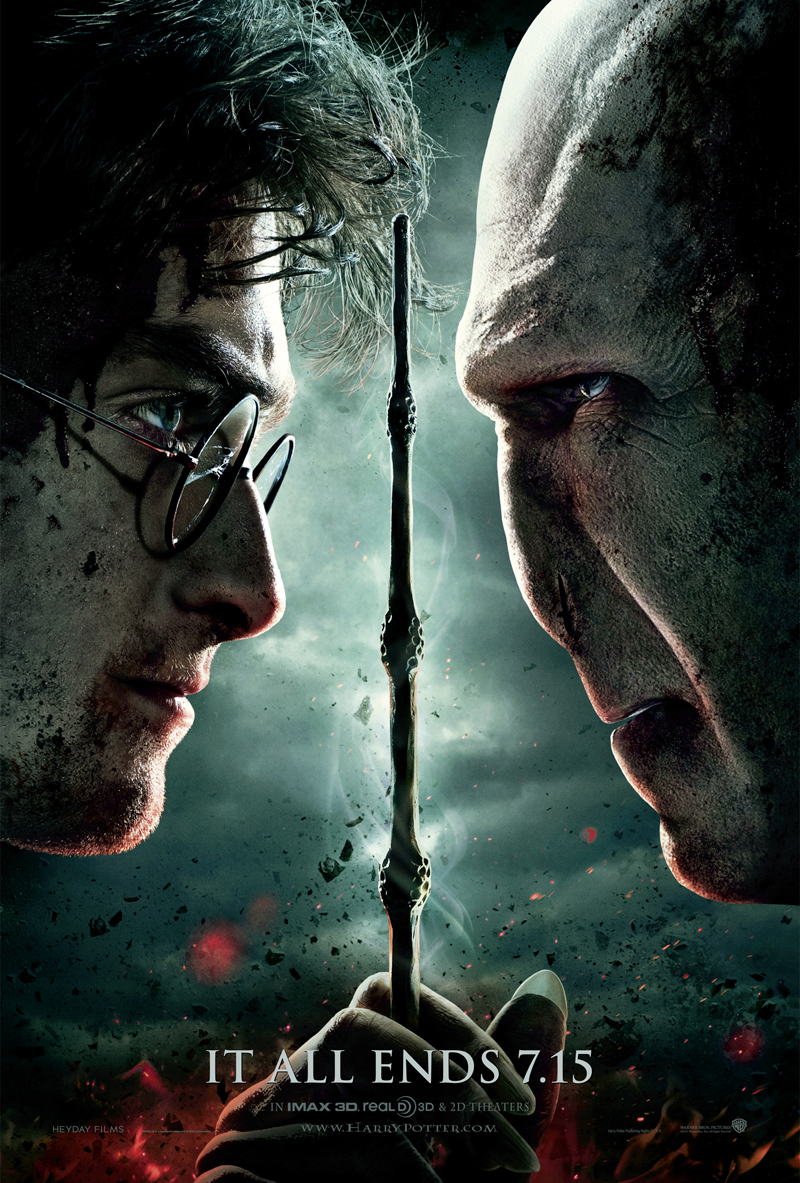
good vs. bad, east vs. west, weak vs strong. This theory becomes more clear to us when we use it in a film. For example "Harry Potter" shows us very clearly how there is a distinct example of 'Harry' being the good guy and 'Voldemort' being the bad guy, in these films. The picture to the right is an advertisement of the film and it clearly shows the audience who is the bad guy and who is the good guy. This example of good vs bad could also be an example of old vs young.
-Vladimir Propp is the fifth and final theory i will be talking about. Propp believed that there are only different character types. he come to this conclusion by analysing old folk stories. He stated that the 8 character types are as follows:
-Hero
-Villain
-Helper
-Donor (Provider)
-Father
-Dispatcher
-Princess
-False Hero
An example of this theory being used is in the film "Harry Potter". The hero would be Harry, the villain would be Lord Voldemort. The helper in this film would either be Ron Weasley or Hermione Granger, the father figure would be Hagrid and the princess would be Cho Chang.
A lady called Laura Mulvey had the opinion that women were viewed in a certain way in cinema and her theory was called The Male Gaze. She used the film 'Rope' to support her analysis. She believed that in the film 'Rope' women were viewed as the objects of male erotic desire and that men were the active ones while women were presented as passive. She also stated that from this film she could sense that women do not have an agency as they do not move the plot forward. She said that the audience if forced to identify with Male Gaze and that cinema reflects Partriachal(male dominated) society. The Pstriatchy and phallocentrism linked the penis as a symbol of a gun.
This sound exercise involved us actually practising what we had previously learnt during our class lesson. In this film we used diegetic, non-diegetic, parallel, dialogue and music.
As a group we decided to put in peaceful and happy music at the start to set out a calm vibe of two friends meeting up discussing the party they both attended last week. We then added in a flashback of Denis dancing on the table. To do this we had to add non-diegetic flashback music that we got from YouTube. Whilst Denis was dancing we added the 'Barbie' music which we also downloaded from YouTube. Later on in the short film we felt that sirens should be added as they would fit in with the scene of David being arrested, this siren noise you hear in the background is diegetic sound.
Looking back on this sound exercise I believe it went well as we were able to use all different types of sound effectively for example our non-diegetic and diegetic sound was all edited in well matching what was going on in this short sketch. I think there was really only one thing wrong with this sound exercise task and that was the microphone being shown accidentally in most scenes. Using this mistake and learning from it is most important so when making our final thriller piece me and the people in my group will have to make sure that the microphone can not be seen.
When filming 'North by Northwest' Alfred Hitchcock said that he wants to transfer the menace that appears on the screen into the mind of the audience.
By watching the movie I can see how he has managed to do this, through a wide use of of different devices and techniques. For example Mise en Scene, Camera Work, Editing and Sound.
Mise En Scene-
Firstly I will be analysing the crop duster scene by looking at Mise en Scene. Mise en scene basically involves things like, the setting, props;hair/makeup/costume, characters body language, colour, lightening etc. The setting of this scene is 'Roger Thornhill' in the middle of no where with no one in sight. This tells the audience how alone he is and also shows us that this may be because no one trusts him, as of all the things people think he has done like stabbing someone in the back. The character placed in the middle of no where shows how isolated and abandoned he must feel. This makes the audience feel sorry for him as we know that he didn't of these crimes that have been pinned against him.
The costume that 'Roger Thornhill" is wearing whilst in the middle of no where in this crop duster scene is an expensive suit. This makes the character look like he shouldn't be there and that he belongs in a civilised area, not the middle of no where by a crop field. The character is purposely dressed like this to make the audience feel as though he is not meant to be there and he is feeling extermely out of his comfort zone.
There are two main props used in this scene, a car and a plane. In the scene 'Roger Thornhill' is standing beside a road waiting for something or someone that doesn't seem to be coming. There are many cars that pass by him but nothing happens, none of these cars stop, no one gets out or speaks to him. The passing cars cause dust showing there us trouble yet to come. this makes the audience feel as though the main character is it harms way and is about to get hurt as he is just standing there beside the road.
The audience can identify the plane as a threat, when the plane flies down and tries to kill Thronhill the audience can tell that the situation is completely his control. the identity of the plane driver is kept from Thornhill and the audience so a sense of mystery remains in this scene.
Camera Work-
The establishing shot in first scene in the crop field tells the audience how secluded Roger Thronhill actually is. This first establishing shot was to tell the audience how alone he is and how he is in the middle of no where.
The point of view shot is used to make the audience feel how lost 'Roger Thornhill' is felling, it puts us in their shoes and forces us to care for the character.
Editing-
There are a few short cut scenes which help show how fast pace the scene eventually is, building up the audiences excitement.
Sound-
This scene and the devices that are used show that the situation is completely out of 'Roger Thornhills' control.
This video below is the trailer for the Alfred Hitchcock's North by Northwest. The trailer's purpose is to give the viewers an insight to what the film is going to be about and to make viewers want to watch the film just by watching this trailer.
There are many different types of genres involving film. An example of some different types of genres are horrors, romance, comedies etc.
Horrors- This type of film id designed to frighten or scare the audience. The genre purpose is to invoke the audiences worst fears by alarming them and shocking them so much that are watching the film they will still be scared. An example of a Horror movie would be 'Nightmare on Elm Street', the films plot is a about a man named Freddy Krueger and how he vigorously stalks a group of teenagers killing them one by one through their dreams.
Within this Horror Genre there are things called sub-genres. An example of some sub-genres for horror are; Teen-horrors, Supernatural-horrors, Zombie-horrors, etc.
Romance- This type of movie genre are basically love stories that are there to make the audience feel emotions like love, passion, pain and affection. You would normally see in a romance film the course of two lovers that express a genuine strong, pure love for each other. An example of a romance film would be 'The Notebook', that is about two young lovers and how they live their life apart for a short amount of time and then in the end find their love for each other is still very strong so ends up pulling them back together.
Again with this Romance Genre there are sub-genres for example romantic dramas and romantic comedies.
Comedy- This type of genre is there to make the audience laugh and have a good time through entertaining stories and characters. An example of a comedy would be 'The Heat', starring two strong females leads played by Sandra Bullock and Melissa McCarthy. The comedy is about a smart excellent FBI agent and a foul-mouthed cop who at first do not see eye to eye but soon reconnect and work together to take down a drug lord.
There are also many sub-genres for this Comedy genre. They are as follows; action-comedy, black-comedy, horror-comedy, romantic-comedy, dramedy, and lastly a parody.